Showing posts with label Dark Fantasy. Show all posts

Sunday, October 6, 2019

Review: A Skinful of Shadows by Frances Hardinge

A Skinful of Shadows by Frances Hardinge
Published: Amulet Books / Macmillan Children’s Books (2017)
Awards Nominated: Locus YA, Lodestar Award for Best Young Adult Book, Carnegie Medal

The Book:

Sometimes, when a person dies, their spirit goes looking for somewhere to hide. Some people have space within them, perfect for hiding. Twelve-year-old Makepeace has learned to defend herself from the ghosts which try to possess her in the night, desperate for refuge, but one day a dreadful event causes her to drop her guard. 

And now there's a spirit inside her. The spirit is wild, brutish and strong, and it may be her only defense when she is sent to live with her father's rich and powerful ancestors. There is talk of civil war, and they need people like her to protect their dark and terrible family secret.”~goodreads.com

I don’t tend to review a lot of YA on this site, but that’s mostly because I know I’m not really the target audience.  Nevertheless, I decided to try reading some of the Lodestar nominees of 2018, and this book was provided to me through NetGalley.  I did read it in time for the voting, but my reviews have just gotten terribly delayed. This novel was my favorite of the bunch, though Summer in Orcus by T. Kingfisher was also really good. This is the first book I’ve read by Frances Hardinge.    

My Thoughts:

I would call A Skinful of Shadows a mix between horror and fantasy.  The horror is obvious; the premise of the book involves spirits invading the bodies of the living.  However, Makepeace does not view her ability to host the spirits of others within her own body as only a thing of terror.  She is frightened by the prospect of her own mind being crushed by the spirits of the dead, but she is also willing to share the space inside herself with those for whom she finds compassion.  I liked that her ability was not portrayed as inherently beneficial or harmful, but as a potentially useful, yet dangerous tool. In this way, the supernatural elements feel more like the magic system of a dark fantasy, and this shifts the whole story closer to my interests.

The heart of the story is the coming-of-age of the heroine, who bears the unusual puritan name of Makepeace. She is a young adolescent girl that does not have the support or guidance of anyone with her best interests at heart. There is a lot about the world around her that she does not understand, and every day she must struggle to find a place within it that doesn’t result in her death, or worse. Even so, she meets the difficulties she encounters with determination, intelligence, resourcefulness, and a solid sense of self-worth.  I thought she was an excellent heroine, and there is a lot in her character that younger readers could admire.

The book starts just before the English civil war (~1640s, I think), which is not a period of English history with which I’m particularly well-versed.  I didn’t feel like my lack of familiarity with the history was a barrier to understanding the story, especially since this seems to be a primarily fictional take on the period. It seems to have been a confusing and chaotic time, and I liked that the narrative primarily focused on the common people caught in the chaos rather than the politics of aristocrats.  Makepeace has no reason to favor one side of the civil war over the other, though she does get caught up in events from time to time. There is also a strong sense of place and atmosphere, so younger readers who are interested in historical fantasy would likely find a lot here to enjoy.  

My Rating: 4/5

Frances Hardinge’s A Skinful of Shadows is an entertaining YA horror/fantasy set in mid-1600s England. The story involves an aristocratic family who has the hereditary ability to harbor spirits of the dead within their bodies, and I appreciated that it considers both the harm and good that can come from such an ability. I liked the strong sense of the place and time, and I liked the mental strength and determination of the heroine, Makepeace.  As an adult, my perspective may not be that of the target audience, but I can say that I enjoyed this novel very much.

Sunday, June 26, 2016

TV Musings: The Magicians Season 1

MagiciansTVseriesLogo
The Magicians is part of the Syfy network’s ambitious new slate of scripted genre programming.  The series is based on Lev Grossman’s popular trilogy, which begins with a novel of the same name. I reviewed the Grossman’s The Magicians here, though I have not read the following two novels. The first book features a miserable young man, Quentin Coldwater, who is accepted into the magical academy of Brakebills. The story follows Quentin and his friends, both through their school days and their eventual journey to the magical world of Fillory (based very loosely on Narnia).  Though it seems to draw influence from the Chronicles of Narnia as well as Harry Potter, The Magicians is definitely not a story suited for children (see the content warning at the end for details).  The television show roughly follows the story of the first novel, though it includes in parallel content from later in the trilogy as well.  I had a lot of fun watching the show, though I felt like it had some missteps.

Any adaptation generally diverges in some ways from the original work, and Syfy’s The Magicians is no exception.  It stays more or less true to the very basic plot (as far as I’m aware), but viewers hoping for the nihilism and ennui of the novel will likely be disappointed.  I appreciated the atmosphere of the novel, but I think I prefer some of the tonal changes that were made for the television adaptation.  For one thing, the characters all seem much less unconditionally miserable.  Quentin is shown to be struggling with depression, but seeing the story from outside his head keeps the focus more on his actions.  He also has some surprisingly endearing quirks, like his ridiculous dreams and his fondness for Taylor Swift.  While Eliot spends some time drowning in grief and substance abuse, his behavior is clearly triggered by his experiences in the show and not just a general malaise.  Finally, while the show does have a lot of grimness and shocking violence, it manages to balance it out with well-placed humor.  I have to appreciate a story this dark that can consistently make me burst into laughter.  

The first season of the show includes not only Quentin’s time at Brakebills, but also the parallel story of his childhood friend Julia, who is rejected from Brakebills despite her magical talent.  Julia’s story was new to me, but I thought it made a lot of sense to keep her side of things moving.  What’s more, they started tying in the Fillory content from the very first episode (through ominous dreams), which seems a nice way to indicate the direction of the main plot.  However, this means that the show began with a massive amount of characters and subplots that it wanted to introduce right away.  This made the first few episodes feel especially rushed, as well as making the characters initially feel a little one-note.  It took a while for me to be really invested in the characters, but it did happen before the end of the season. Past the first few episodes, things began to slow down a little bit, and each of the characters began to develop through their individual stories.

As much as I’ve been enjoying the show, there are a few things that bug me along the way.  First, I feel like the child abuse is included only for shock value, and I don’t think it is kind to ascribe child abuse to a fictional character that is obviously based on a deceased actual person.  Second, they currently seem to fall several times into a common television trope that requires gay people to never have happy endings.  Finally, there is a general lack of focus in the show, with side plots that are often randomly dropped and never mentioned again.  The most egregious example of this is Quentin’s father’s terminal illness, which seems to be introduced solely to teach Quentin that magic can’t solve everything. However, he doesn’t really try very hard before giving up on his father, and then he never mentions or contacts him again.  Several of the others have similar glitches like this (Alice’s grief for her brother, Julia’s relationship with her fiancĂ©, etc...), which unfortunately undermines my perception of the coherence of their character.  Despite these significant complaints, though, I have actually been enjoying the show, and I am excited to see what everyone will do in the second season.  I’m hoping that the show continues to grow and improve as it moves forward!

Content warning: language, sexual content, violence, substance abuse, child abuse, sexual violence.

Tuesday, March 1, 2016

Review: Finch by Jeff Vandermeer

Finch by Jeff Vandermeer
Published: Underland Press (2009), Corvus (2010)
Series: Book 3 of Ambergris
Awards Nominated: Nebula, World Fantasy and Locus Fantasy Awards

The Book:

“In Finch, mysterious underground inhabitants known as the gray caps have reconquered the failed fantasy state Ambergris and put it under martial law. They have disbanded House Hoegbotton and are controlling the human inhabitants with strange addictive drugs, internment in camps, and random acts of terror. The rebel resistance is scattered, and the gray caps are using human labor to build two strange towers.

Against this backdrop, John Finch, who lives alone with a cat and a lizard, must solve an impossible double murder for his gray cap masters while trying to make contact with the rebels. Nothing is as it seems as Finch and his disintegrating partner Wyte negotiate their way through a landscape of spies, rebels, and deception. Trapped by his job and the city, Finch is about to come face to face with a series of mysteries that will change him and Ambergris forever.” ~WWEnd.com

Somehow, I completely missed the fact that Finch was part of a larger series until after I’d finished reading the novel. I don’t think the series is a continuous story, but I suspect some details might have been a little clearer if I’d read the other two first.  Anyway, this was a bewildering introduction to Jeff Vandermeer for me.  In any case, I’m open to trying more of his novels in the future, because of his unusual style. 

My Thoughts:

From the very beginning of the novel, I began to suspect that I had picked something completely outside my comfort zone.  I’m not really a huge fan of horror or noir, and I think Finch can be best described as a mix between the two.  Also, I am intensely disgusted by fungus, to the extent that it’s difficult for me to even prepare mushrooms (though I do eat them). The setting of Finch placed a lot of emphasis on feelings of dirtiness, lack of physical integrity, and disgust, through descriptions that lingered over various forms of fungi, fungal infestation and living fungal creatures.  I guess the setting achieved it’s goals with me, though sometimes it was so gross that I had to stop reading for a while.  It’s really a testament to the creativity of the story that I always wanted to come back and read it later. 

Aside from the revulsion factor, I enjoyed the strangeness and complexity of the situation in Ambergris. Though the story started with the usual noir “detective with a sad past investigates a mysterious murder” line, the investigation was really not the point. Finch told us from the beginning that he wasn’t really a detective, and that he was just going through the motions in hopes of surviving the occupation. It took me a long time to get a clear understanding of Finch’s past and of the different political human factions, and I think there’s quite lot that I never managed to grasp. In retrospect, I wonder how much clearer things would have been if I’d read City of Saints and Madmen and Shriek: An Afterword first.  Even without the grounding from the other Ambergris books, though, it was entertaining to try to make sense of everything that Finch uncovered. 

In addition to the fungal grossness, the overwhelming atmosphere of despair in the novel kept me reading it in small bites.  Finch had lost everything except his life, and he was forced to live in a never-ending nightmare. Ambergris was taken from the human inhabitants and transformed into something unrecognizable to them, as Finch’s partner Wyte was colonized by a fungus that was destroying both his mind and body. Finch’s sense of hopelessness gave the narration a feeling of detachment, which might have been part of why I never felt much of an emotional investment in the secondary characters. The end of the story was pretty exciting, but it also left a fair number of open questions.  Overall, this was a difficult book for me, but I appreciated it’s creativity.

My Rating: 3/5


I didn’t realize that Finch was the third Ambergris book until after I’d finished reading it, so I probably lacked some foundation in understanding the complicated world.  That, among other things, made this a challenging novel for me.  I’m not a huge fan of weird horror and noir, which this book combines, and I had a strong disgust reaction to the fungal setting.  Despite this, I really enjoyed the strangeness and creativity of the story and of Ambergris, and I’ll probably read more of Vandermeer’s work in the future.  I think I’ll pick a novel with less fungus next time, because his writing on that front is too evocative for me to handle!

Thursday, October 8, 2015

Review: Empire Ascendant by Kameron Hurley

Empire Ascendant by Kameron Hurley
Published: Angry Robot Books, 2015
Series: Book 2 of the Worldbreaker Saga

Beware of spoilers for book 1 of the Worldbreaker Saga, The Mirror Empire!

The Book:

Loyalties are tested when worlds collide… Every two thousand years, the dark star Oma appears in the sky, bringing with it a tide of death and destruction. And those who survive must contend with friends and enemies newly imbued with violent powers. The kingdom of Saiduan already lies in ruin, decimated by invaders from another world who share the faces of those they seek to destroy.

Now the nation of Dhai is under siege by the same force. Their only hope for survival lies in the hands of an illegitimate ruler and a scullery maid with a powerful - but unpredictable - magic. As the foreign Empire spreads across the world like a disease, one of their former allies takes up her Empress's sword again to unseat them, and two enslaved scholars begin a treacherous journey home with a long-lost secret that they hope is the key to the Empire's undoing. But when the enemy shares your own face, who can be trusted?” ~WWEnd.com

Since Empire Ascendant came out October 6th, I’m bumping this review to the top of my queue!  I received this novel as an advanced review copy, as a promotional gift for purchasing a physical copy of the first novel, The Mirror Empire. Also, as a note, this is the kind of series where you really do need to read the books in order, so new readers should grab The Mirror Empire first.

My Thoughts:

The Worldbreaker Saga is set in a very complicated and unusual world, and Empire Ascendant expands on the understanding I had gathered from the first book in the series.  This is not a series that handholds through world-building explanations, and most of the viewpoint characters are struggling to make sense of what’s happening to their world alongside the reader.  After the second book, I feel like I have a clearer idea of the magic system and how the satellites move through the parallel worlds, as well as a better grasp of the various cultures and their broad goals.  The different cultural ideas of gender are still present, and they even seem to take slightly more prominence in the story.  At this point, I find the five-gendered Dhai system the most interesting, with its self-assigned gender roles that are decoupled from biological determinism. I feel like there’s still plenty about the worlds and their inhabitants that I don’t know, but I suppose that should be true of any complex imagined multiverse.

As expected for the second act of a three act story, the situation becomes even grimmer for each of the characters, as they are faced with challenges that may well be insurmountable.  I felt like nearly everyone was injured or permanently maimed in some way through the course of the story, and it is clear that no character is immune from being violently killed.  I appreciated that the injuries the characters take are actually debilitating and ugly, rather than the usual superficial hero’s scars.  The characters have to find the strength to endure, despite the physical and psychological damage they experience. Even if they succeed in their goals, there’s no guarantee of a happy ending waiting for them.  The tension is rising, and I dread seeing which characters will fall in the last third of the series.

While there was certainly plenty of action and plot progression in Empire Ascendant, the many viewpoint characters’ individual stories were mostly divergent.  Since this is planned as a trilogy, I have every confidence that their stories will converge in exciting ways in the final volume.  I am enjoying how difficult it is to guess how the story will end, since there is no clear struggle between good and evil.  Instead, all of the factions are simply doing what they can to protect what they love, regardless of the cost to themselves and others.  For instance, the invading Tai Mora have committed great atrocities, but it is in the effort to escape their own dying world and protect their loved ones. I don’t want them to win, but it’s easy to see how their leaders felt forced into the actions they’ve taken.

With this muddy moral landscape, I’ve been most interested by the viewpoint characters who avoid acting with deliberate cruelty. I enjoyed Roh’s innocence in The Mirror Empire, and here he grows through suffering.  The abusive Zezili’s meek husband Anavha doesn’t play a large role, but his chapters were some of my favorite.  Luna, a ‘ataisa’ Dhai slave in Saiduan (though I think ze’s male-passive in Dhai), gives a different sort of perspective on the world.  In more ruthless protagonists, Lilia and Ahkio also have very intense stories, as they both try, in their own ways, to protect Dhai from invasion.  I can’t wait to see how all of the conflicts conclude in the final volume, and what is left of the primary world when they do.

My Rating: 4/5

Empire Ascendant is what I was hoping for in a sequel to The Mirror Empire, a novel that expands on the unusual setting and drives up the tension in the conflict between parallel worlds.  The handful of viewpoint characters live in a very dangerous multiverse, and any of them could be maimed or killed at any time. There are no heroes or villains, only people who are trying desperately to protect their own, and who have different limits on what they’re willing to do to achieve their goals.  By the end of this book, there are still a number of separate character stories ongoing, so it will be interesting to see how these are going to be tied together.  It’s going to be a long wait for the conclusion, The Broken Heavens, which is due to come out in fall 2017!   

Monday, April 6, 2015

Review: The Mirror Empire by Kameron Hurley

The Mirror Empire by Kameron Hurley
Published: Angry Robot Books, 2014
Series: Book 1 of the WorldBreaker Saga

The Book:

On the eve of a recurring catastrophic event known to extinguish nations and reshape continents, a troubled orphan evades death and slavery to uncover her own bloody past...while a world goes to war with itself. In the frozen kingdom of Saiduan, invaders from another realm are decimating whole cities, leaving behind nothing but ash and ruin. At the heart of this war lie the pacifistic Dhai people, once enslaved by the Saiduan and now courted by their former masters to provide aid against the encroaching enemy.

Stretching from desolate tundra to steamy, semi-tropical climes seething with sentient plant life, this is an epic tale of blood mages and mercenaries, emperors and priestly assassins who must unite to save a world on the brink of ruin. As the dark star of the cataclysm rises, an illegitimate ruler is tasked with holding together a country fractured by civil war; a precocious young fighter is asked to betray his family to save his skin; and a half-Dhai general must choose between the eradication of her father's people or loyalty to her alien Empress.  

Through tense alliances and devastating betrayal, the Dhai and their allies attempt to hold against a seemingly unstoppable force as enemy nations prepare for a coming together of worlds as old as the universe itself. In the end, one world will rise - and many will perish.” ~WWEnd.com

This is the third book I’ve read by Kameron Hurley.  I’ve read God’s War and Infidel from her science fiction bug-technology trilogy, and have unfortunately not yet read the conclusion, Rapture (a failure of planning, not of intent). I bought The Mirror Empire during Hurley’s book-launch promotion, so I actually have a copy with a signed book plate!  I believe I will also be receiving a review copy of The Empire Ascendant at some point, so hopefully I’ll manage to have that review up near the publication date.  In other news, Hurley is also going to be publishing a space opera novel, The Stars are Legion, in 2016!

My Thoughts:

The Mirror Empire is the first novel of an unusual, dark, epic fantasy series. If you think that the description in the blurb above sounds very complicated, that’s because it is.  While it features the usual detailed cultures and magic system of epic fantasy, the setting itself is far from ordinary.  This is world of organic buildings and mobile, carnivorous plants, where the magic rises and falls with the prominence of the various satellites.  It is also a world that can be connected through blood portals to other, ‘mirror’ worlds, where the same peoples have experienced differing histories that have led to a wildly diverging present. There’s a massive amount of information to take in, but it is revealed only as it becomes directly relevant.  This approach avoids long explanatory sections, but also makes it a little difficult to get a sense of the world early on.  So far, though, getting to know this world has been worth the effort, and I expect that the familiarity gained through this novel will make it much easier to dive into the next.

The world of The Mirror Empire also follows the current trend toward dark, gritty fantasy, where any given character can very easily be hurt, maimed, or killed, and the lines between good and evil are blurry at best. The death and violence throughout could be a little overwhelming at times, but the novel never quite went past my ‘grimdark’ limit.  Part of that may have been because the grittiness of the setting was not established through the particular use of culturally-sanctioned violence against women. In fact, gender roles and expectations appear to vary significantly across the variety of cultures and races. In one culture there are three recognized genders, and in another, one can self-identify as any of five accepted genders.  The closest any culture comes to the usual gritty fantasy setup is Dorinah, where pseudo-medieval gender roles are reversed.  It was one of the more interesting twists on a generally boring culture that I’ve read, though I am happy that this culture was not the sole focus.  I’m curious to see how these cultural differences will affect the story to come.  

As in most epic fantasies, the novel follows a handful of diverse viewpoint characters. The four primary characters are Lilia, Ahkio, Roh, and Zezili.  Lilia seems most like a fantasy protagonist to me, with her tragic past and her great magical potential.  However, she is neither beautiful and nor completely able-bodied, and she spends a lot of time focusing on protecting herself from a world that would kill her without a care. Ahkio has been thrust into a leadership position that he neither expected nor wanted, and I spent a lot of time tensely waiting for him to fail horribly. I enjoyed the Roh’s childish exuberance, but I dread to see what the world will eventually force him to become.  Zezili, a powerful woman of Dorinah, carries a lot of the negative traits that are often forgiven in heros, and I am curious to see how she may develop in future novels. There were also a handful of interesting secondary viewpoint characters, such as the Dhai hero Ghrasia and Zezili’s delicate husband Anavha. I enjoyed the very different perspectives provided by each of the viewpoint characters, and I think that this is a group I will happily follow through the sprawling fantasy story that The Mirror Empire has begun.  

My Rating: 4/5

The Mirror Empire starts off a dark epic fantasy series that takes place in a very unfamiliar world, and features a set of characters that don’t fall into the standard epic fantasy archetypes. The world is incredibly complex, with many cultures, multiple worlds, a satellite-based magic system, and an unusual physical setting. There are no long explanations to break up the narrative, so an understanding of the world is pieced together as you go along. The viewpoint characters are diverse and have interesting flaws, and I think it is a group that will make for an entertaining long-term story.  I’m already looking forward to the sequel!  

Friday, January 25, 2013

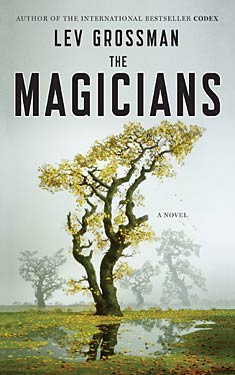
Review: The Magicians by Lev Grossman


This post marks the beginning of my review series focused on newer writers, which I am writing for the WWEnd.com blog.  Worlds Without End has a number of great review series to read, including "Forays Into Fantasy", "SF Manga 101" and the many reviews from the 2013 Women in Genre Fiction Reading Challenge! The first section below is an introduction to the ideas behind my series, and the second is a review of Lev Grossman's The Magicians.  

I’ve been drawn to science fiction and fantasy since I learned to read. As I imagine is the case with most speculative fiction fans, at the core of my continuing fascination is the insatiable desire to read stories that are, in some way, unlike what I have read before. Sometimes I find very familiar stories told in new ways, such as Jo Walton’s Tooth and Claw. Sometimes I find stories that are entirely unfamiliar to me, such as in Catherynne M. Valente’s Deathless. Sometimes I’m amazed by the creative mind of the author, as in MiĂ©ville’s Perdido Street Station, or by the extrapolation of current trends to bizarre future societies, as in Rajaniemi’s The Quantum Thief. Speculative fiction is such a wide field and the stories to be told are limited only by the imagination and skill of their creators.

Of course, the only way to continue to enjoy these new kinds of stories is to constantly stretch one’s horizons as a reader. WWEnd’s convenient awards rankings, theme book lists, and now yearly challengeshave helped me to continue to expand my experience of genre fiction. As a continuation of this, I am going to make a special effort to read and review the debut novels of relatively new authors in the field. The John W. Campbell Award for Best New Writer will guide my selections, but I will necessarily branch out to other new authors that catch my interest. Through this series, I hope to discover many new and upcoming authors, and to possibly bring them to the attention of others.
I’m beginning with Lev Grossman’s The Magicians, for which he won the 2011 John W. Campbell Award for Best New Writer*. I know this book is far from unknown, but I think it is a good place to begin my study of new authors in science fiction and fantasy.

*The 2012 winner was E. Lily Yu, for a short story located here, free of charge. I would feel silly writing a review of it, when anyone could read the actual story just as quickly!

The Magicians
The Magicians by Lev Grossman
Published: Viking UK and William Heinemann (2009)
Series: Fillory: Book 1

I will try to steer clear of most spoilers, but I will describe the plot in general terms. Read at your own risk!

As is common these days, Grossman has a website and blog where one can find information about his publications, authorial activities, and more. In actuality, The Magicians is not Grossman’s first novel, since it is predated by the thriller,Codex (2004),and a novel of aimless post-graduate trekkie life, titled Warp (1997). The Magicians is his debut in the fantasy genre, though I wonder if some parts of the depiction of ‘aimless post-wizard-school life’ are informed by his work writing Warp. In terms of age suitability, The Magicians contains a lot of substance abuse, sexual content, and some violence.

The Magicians has been popularly described as “Harry Potter for adults”, a phrase that I’m afraid will soon become too common to be a useful descriptor. At least in one way, it is literally true here—the novel tells the story of a group of 18-year-olds who are unexpectedly invited to attend a hidden college of magic, called Brakebills. The main character is Quentin Coldwater, a perpetually dissatisfied teenager and academic overachiever who is obsessed with a series of British books about a fantasy world called Fillory. The first part of the story follows his years at Brakebills, where he and the other academically driven students live in an abnormally strict prep-school-style community. Quentin eventually develops a close-knit group of friends who study together, reluctantly play strange competitive magical sports, fall in love and/or lust, and drink lots of wine. After graduation, Quentin and his friends flounder until they find a new purpose—going to Fillory, a world that may be not so fictional after all.

The characters in The Magicians are believable, but a little difficult to like. Quentin and his friends mostly view the world with bored cynicism and contempt, despite the magical wonders around them. Quentin is particularly irritating, with his insistence on being miserable in all situations. He was one of those people who are convinced that ‘real’ happiness occurs only when the universe forces it on you. Therefore, he just wanders through life aimlessly, whining constantly that the world isn’t making him happy. I felt most sympathetic towards Quentin during his time at Brakebills, where he found unexpected joy in the camaraderie of his small group of friends. I could appreciate Quentin’s quiet desperation to preserve that transient sense of belonging.

In the same way, I was most affected by the portrayal of the college and post-graduate lives of Quentin and his friends. Despite the magic, some of the highlights of their college experience are not all that dissimilar (in theme) to real life. I can appreciate the friendships that arise through studying and relaxing together day after day, and the cold dread when you realize that the group will likely disperse after only a few years. Similarly, I recognize the lack of purpose that can descend after spending seventeen years in a highly regulated school environment, only to find that you aren’t sure what to do with all that accumulated knowledge. It can be hard to switch from measuring yourself by academic achievement to setting and achieving your own personal goals. Quentin and his friends don’t deal with any of these situations particularly well, but I suppose that is also quite realistic.

The Magicians
Concerning the more fantastical side of the story, it’s very clear that The Magicians has strong influences from existing works in the genre. Grossman even highlights this fact with explicit references to Harry Potter,Lord of the Rings, Dungeons & Dragons, and probably others that I didn’t catch. The one influence that affects the story most heavily, though, is C.S. Lewis’s Chronicles of Narnia. The Fillory and Further novels, by fictional author Christopher Plover, are clearly modeled after Lewis’s work. Though the connection between the two is obvious, there are differences between Fillory and Narnia—Fillory does not appear to be a Christian allegory, and it plays a different kind of role in Quentin’s story. However, I couldn’t quite figure out if Fillory was intended as a darker, more cynical homage to Narnia or a mockery. Specifically, there were certain personal insults leveled at Plover that did not sit well with me, considering that he is a reference to an actual deceased person. Aside from this, most of the references were fun to pick out, and I liked how it emphasized that the characters of The Magicians were familiar with these enduringly popular classics of fantasy.

While the heavy influence of other fantasy works is undeniable, Grossman puts his own twist on some things. I most enjoyed how magic was treated as a legitimately difficult discipline. As in other disciplines, such as music or physics, one can only become more skilled through constant, intense study. Even after graduation, the magicians can’t just re-order reality on a whim. Some of them are capable of remarkable feats of magic, but only when given time for study and preparation. I really loved seeing the ‘nuts and bolts’ of the practice of magic, as Quentin and his friends studied at Brakebills.

In the end, there were many things that I felt The Magicians did well, though there were some things that bothered me. I enjoyed the portrayal of college and post-graduate haze, though I was less interested in the stories of Fillory. The characters were deeply flawed, possibly to the extent of being unlikeable for some readers. There were plenty of allusions to previous works in fantasy, but the grimly realistic tone and interesting take on the study of magic set this novel apart. The Magicians was an interesting introduction to Grossman’s work, and I will probably try more of his novels in the future.

Tuesday, November 6, 2012

Review: Perdido Street Station by China Miéville


Perdido Street Station by China Miéville
Published: Macmillan Publishing (2000),  Del Rey (2001)
Series: New Crobuzon Trilogy: Book 1
Awards Nominated: British Science Fiction Association, Locus Fantasy, World Fantasy, Hugo, and Nebula Awards
Awards Won: British Fantasy Society and Arthur C. Clarke Awards

The Book:

Beneath the towering bleached ribs of a dead, ancient beast lies New Crobuzon, a squalid city where humans, Re-mades, and arcane races live in perpetual fear of Parliament and its brutal militia. The air and rivers are thick with factory pollutants and the strange effluents of alchemy, and the ghettos contain a vast mix of workers, artists, spies, junkies, and whores. In New Crobuzon, the unsavory deal is stranger to none—not even to Isaac, a brilliant scientist with a penchant for Crisis Theory.

Isaac has spent a lifetime quietly carrying out his unique research. But when a half-bird, half-human creature known as the Garuda comes to him from afar, Isaac is faced with challenges he has never before fathomed. Though the Garuda's request is scientifically daunting, Isaac is sparked by his own curiosity and an uncanny reverence for this curious stranger.

While Isaac's experiments for the Garuda turn into an obsession, one of his lab specimens demands attention: a brilliantly colored caterpillar that feeds on nothing but a hallucinatory drug and grows larger and more consuming by the day. What finally emerges from the silken cocoon will permeate every fiber of New Crobuzon, and not even the Ambassador of Hell will challenge the malignant terror it invokes...” ~WWend.com

After months languishing in my upcoming review list, I’ve finally finished reading Perdido Street Station! This novel has gotten plenty of attention from genre awards, and I’ve heard more than one person say this is the first MiĂ©ville work a new reader should try.  I’m not new to reading MiĂ©ville, since I’ve already read The City & The City and Embassytown, but those two novels inspired me to seek out more of his work.  Perdido Street Station is the first book of a series, but I believe that each novel is effectively a stand-alone book set in the same world (Bas-Lag), of which New Crobuzon is a major city-state.

My Thoughts:

The complex and gritty city of New Crobuzon is one of the most impressive parts of Perdido Street Station.  In a sense, one could consider New Crobuzon to be one of the most important characters in the story.  The wealth of information on all of the architecture, neighborhoods, species, social groups and attitudes, and political factions could sometimes be a little overwhelming, but it was always fascinating to see how all of these pieces interacted to build up the whole of New Crobuzon.  By the end, I felt like I not only had an appreciation for the geography of the city, but for the physical and psychological makeup of the population and their internal conflicts.  All of this information was slowly dispersed throughout the story, so that it seemed there was always something new to discover on the next page.  I’ve always been a fan of detailed world building, so I loved learning about the massive, diverse city of New Crobuzon.

In talking about the story, I think it is easiest to define two sections—“pre-metamorphosis” (of Isaac’s strange caterpillar) and “post-metamorphosis”.  I ended up being more interested in the “pre” section.  This part of the story was relatively low tension, and gave a feel for what normal, daily life is like in New Crobuzon.  The main characters were a rebellious scientist, Isaac, and his khepri (part-insect, part-human) artist girlfriend, Lin.  I enjoyed spending time looking at the world from their perspectives, and their existence in distinct racial and social groups gave a good view of some of the different lifestyles within the city.  They also provided a window into how one practices art and science in this fantasy world.  Aside from the perspective they gave on New Crobuzon, they were also pretty well-drawn, flawed, likable characters. I was thoroughly engaged in following Isaac and Lin’s ‘normal’ lives.  

The “post” section was basically a monster hunt.  The city was still interesting, and there were still more nooks and crannies to discover, but I found my enthusiasm for the story occasionally flagging.  One thing that might have contributed to this was the proliferation of characters in point-of-view positions and their associated subplots.  I was very invested in Isaac and Lin, and I just didn’t have the same interest in all the minor characters, especially since they were often not very fleshed out.  Adding so many subplots also made me feel as though the pace of the story was slowing down as the tension increased. I was also less interested in the monster hunt, so this section began to seem a little unnecessarily long.  Since there are very limited ways a monster hunt can end, I did not think that the ending would surprise me.  While some things went as expected, I would have to call the ending, at the very least, unconventional.  I’m not sure whether I appreciate leaving the story on that particular final note, but I’m still looking forward to returning to the world of Bas-Lag in the future.

My Rating: 4.5/5

Perdido Street Station is an impressively creative novel.  The city of New Crobuzon is such a complex setting that I felt as though I were still learning about its intricacies up through the end of the novel.  The city, its structure, its magic and science, its art, its subcultures and its various species and cultures all feel gritty and real.  The main characters for the first part of the story, the scientist Isaac and the artist Lin, are well developed and sympathetic.  I was most fascinated by the portions about the two of them going about their careers in this fascinating city.  Midway through, the novel takes a wild left turn, and I was less engaged with the subsequent story. This section exploded with many new minor characters and subplots, which seemed to slow down the pace with the rising action.  I’m still not sure if I’m satisfied with the ending, but this is definitely a novel that I will remember for a long time to come.  

Friday, August 19, 2011

Review: Indigo Springs by A.M. Dellamonica


Indigo Springs by A.M. Dellamonica
Published: Tor, 2009

The Book:

Indigo Springs is a sleepy town where things seem pretty normal . . . until Astrid’s father dies and she moves into his house. She discovers that for many years her father had been accessing the magic that flowed, literally, in a blue stream beneath the earth, leaking into his house. When she starts to use the liquid "vitagua" to enchant everyday items, the results seem innocent enough: a “’chanted” watch becomes a charm that means you're always in the right place at the right time; a “’chanted” pendant enables the wearer to convince anyone of anything . . .

But as events in Indigo Springs unfold and the true potential of vitagua is revealed, Astrid and her friends unwittingly embark on a journey fraught with power, change, and a future too devastating to contemplate. Friends become enemies and enemies become friends as Astrid discovers secrets from her shrouded childhood that will lead her to a destiny stranger than she could have imagined . . . “ ~barnesandnoble.com

I read Indigo Springs both because it is the August novel for the 2011 Women in Fantasy Book Club and ‘Calico’s Dare’ from the review blog Calico Reaction. This is A.M. Dellamonica’s first novel, and it definitely made me look forward to getting a chance to read more of her work.  It appears that she is working on a sequel to Indigo Springs, titled Blue Magic, planned for release in 2012.

My Thoughts:

Indigo Springs impressed me with its creative magic system, interestingly flawed characters, and its non-linear approach to storytelling, relating the story in two major interwoven narrative threads. The story opens with the first-person present-tense point of view of criminal interrogator Will Forest, as he tries to extract information from the mentally unstable prison inmate Astrid.  At this point, some catastrophe has clearly occurred, but the details are unclear. Will’s story serves initially as a frame for the second narrative thread, a past-tense account of events starting from the day Astrid and her friends first moved into her late father’s house.  I enjoyed the use of both ‘past’ and ‘present’ stories, though I did feel that the events in the gap between the two timelines ended up a little too rushed over for my taste. Otherwise, the two storylines balance each other well, both building in energy as they approach the climax of the book.

A third, minor narrative thread, consisting of flashback memories of Astrid’s childhood, serves to introduce the reader and characters to the detailed vitagua lore. Though I appreciated the flashbacks as an effective way of dispensing vitagua lore in manageable chunks, I felt that their existence, and the story they told, seemed a little bit contrived.  When the origin of the flashback sequences were eventually revealed, I felt like the explanation was a little abrupt and slightly off my sense of Astrid’s character. 

On the other hand, I really enjoyed the content revealed by these memories.  The powerful, dangerous, ‘vitagua’ was a very interesting take on magic, and the lore behind it was delightfully complex.  The ‘chantments’ were flashier than most magic I’ve seen in novels lately, but they were balanced by their consequences and limitations.  I particularly liked the idea of alchemical contamination.  Among other things, the contamination would exaggerate parts of the victim’s personality, turning what might be a slightly dysfunctional personality quirk into a major problem.  I felt like this kind of lore put more focus on the characters, and how they reacted to the magic, than on the magic tricks themselves.

Speaking of characters in Indigo Springs, I loved how strongly their personalities shone through in the story.  The novel tended to lean on dialogue over description, so I think that it would not have been nearly as successful if the characters hadn’t had such strong voices.  The three main characters are Astrid, her stepbrother Jacks, and her recently-dumped friend Sahara. Astrid is a compulsive peacemaker who fears being abandoned, Jacks is rebelling against his father’s plan for his life, and Sahara is accustomed to getting whatever she wants.  The three of them feel like complete people, with their own goals, dreams, and very realistic personality flaws and blind spots. Much of the story revolved around the flawed relationships between these three friends and the other colorful inhabitants of their small town.

My Rating: 4/5

Indigo Springs is an entertaining debut novel, with a richly imagined magical world and strong, imperfect characters.  It was fast-paced and exciting, and the interweaving of the storylines from before and after the Alchemical disaster kept the tension rising throughout.   The magic blue water ‘vitagua’ was a creative new take on magic, and I’m looking forward to seeing how vitagua will affect the world in Dellamonica’s sequel, Blue Magic.  Though I enjoyed the detailed vitagua lore, I thought that the series of flashbacks dispensing it seemed a little contrived.  Also, while the conclusion was exciting, it felt as though the central Alchemical disaster of the book was a little rushed.  Overall, it was a thoroughly fun book, and I would recommend it to anyone who’s in the mood for some fresh, imaginative contemporary fantasy.